
The software development industry is undergoing a profound shift. Teams that once spent months writing boilerplate code, debating architecture, and chasing bugs are now shipping production-ready applications in weeks, not by hiring more developers, but by embedding AI into every layer of the workflow. Thinkwik, a software development company headquartered in Ahmedabad, India, is one of the clearest examples of what this new model looks like in practice.
The Problem With Traditional Timelines
Full-stack mobile applications have always been time-intensive. A cross-platform app with real-time messaging, cloud storage, secure authentication, and a scalable backend typically takes a focused team 4.5 to 6 months to deliver. That timeline isn't driven by laziness, it reflects the genuine complexity of coordinating design, architecture, frontend, backend, testing, and deployment across a team.
But time is expensive. Every extra week of development translates into higher project costs, delayed market entry, and client frustration. The industry recognized this long before AI tools arrived, but it took the emergence of tools like GitHub Copilot, Claude, and Cursor to fundamentally change what's possible.
Thinkwik's Approach: AI Embedded, Not Bolted On
When Thinkwik was engaged to build Good Deed IT, a community-driven volunteer platform for iOS and Android, the team made a deliberate choice: AI tools would not be optional add-ons. They would be standard operating procedure at every single phase of the project.
The result? A full-scale cross-platform application delivered in 2 to 2.5 months instead of the typical 4.5 to 6 months, a 55% reduction in development timeline. Project costs dropped by approximately 50–55% compared to a traditionally built project of the same scope, and test coverage reached 70–75%, compared to an industry average of 40–50%.
7 AI Tools, One Seamless Workflow
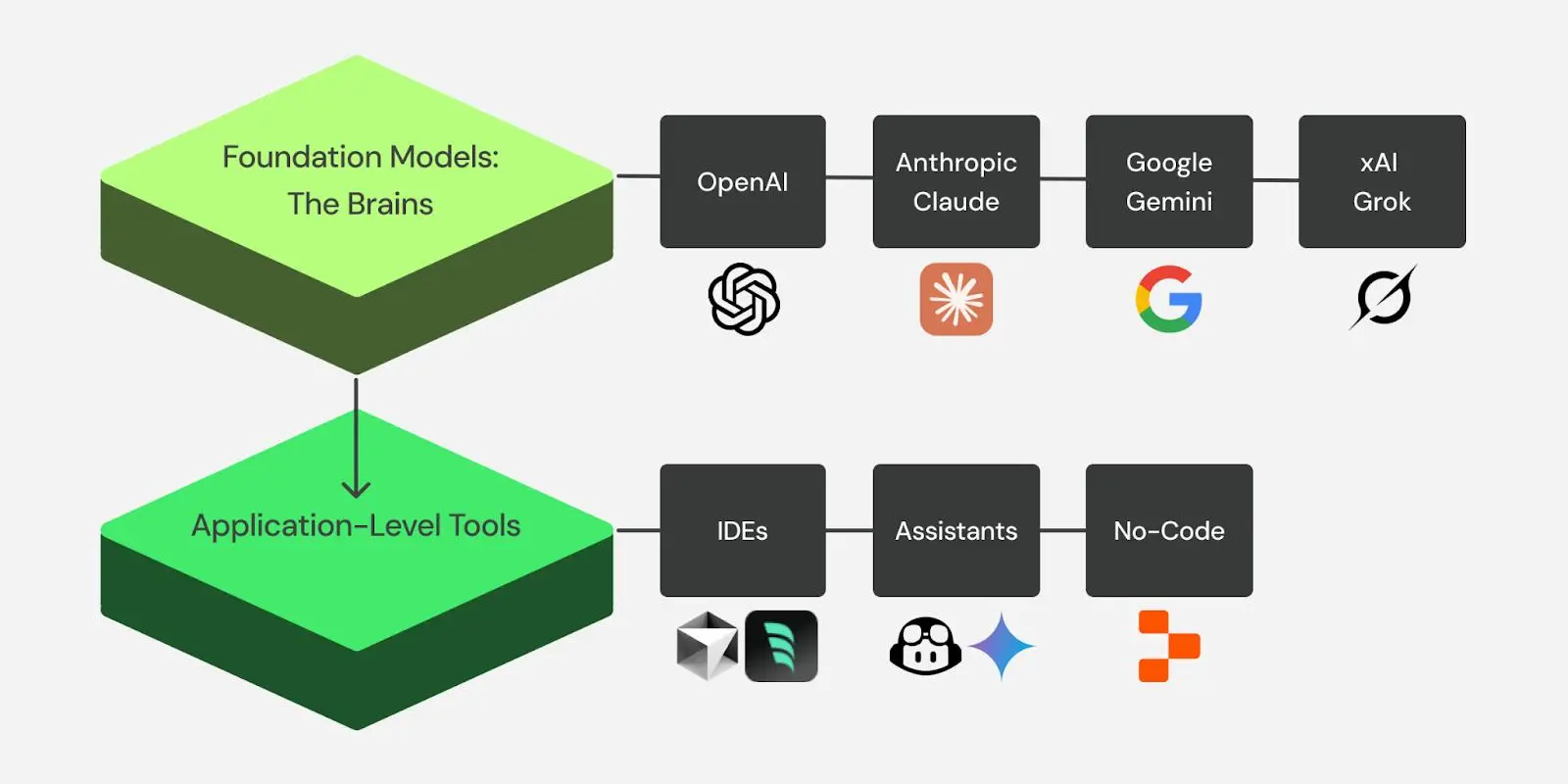
Rather than using one AI tool for everything, Thinkwik assigned specific tools to specific phases, each with a clear purpose and measurable outcome.
Planning & Architecture
Claude (Anthropic) was used before a single line of code was written. The team validated the full application architecture, reviewing data flows, API design, and security logic, through Claude. Two critical bugs in JWT token refresh and role-based access control were caught before production, eliminating costly late-stage fixes.
UI/UX Design
Lovable generated production-ready UI screens from natural language descriptions. The deed creation flow, volunteer listing, and real-time chat UI were all designed, reviewed, and approved through Lovable before any frontend code was written. What normally takes 2–3 weeks of design and back-and-forth was completed in under 5 days.
Daily Coding
GitHub Copilot was active every day in VS Code, offering inline suggestions as developers wrote React Native screens, Redux slices, and Express API routes. Boilerplate that previously took 2–3 hours per module dropped to under 30 minutes, with approximately 40% of routine code generated through Copilot assistance.
This aligns with broader research: GitHub's own studies showed developers using Copilot completed tasks 55% faster, and a real-world deployment at ZoomInfo found 90% of developers reported reduced task completion times with a median reduction of 20%.
Complex Refactoring
Cursor (an AI-native IDE) handled multi-file changes where Copilot's file-by-file approach wasn't sufficient. A codebase-wide refactor that would normally take 2 full days was completed in under 4 hours. The real-time chat module, the most architecturally complex component, was restructured with no regressions.
Agentic Feature Implementation
Claude Code took autonomous end-to-end feature implementation to a new level. Developers gave it a plain-language instruction, for example, "implement the volunteer invite flow with API integration and Redux state update", and Claude Code navigated the full codebase, created and updated all necessary files, and wired everything together. The developer then reviewed and merged. The media upload module and notification integration were each completed in hours instead of days.
Testing & Schema Design
ChatGPT (OpenAI) was used by the QA team to generate comprehensive Jest unit tests for all utility functions and API validators. MongoDB schemas were drafted and refined through ChatGPT before being finalized. Data model issues were caught early, before they became expensive refactors.
Cloud Infrastructure
AWS CodeWhisperer handled EC2, S3, CloudFront, and deployment scripting. Infrastructure setup was reduced from 5–7 days to approximately 2 days, and staging and production environments were correctly isolated from the very first deployment.
What the Industry Is Seeing
Thinkwik's results are exceptional, but the trend they represent is well-documented across the industry.
McKinsey's 2026 Technology Trends Report found that companies leveraging AI in development are seeing productivity gains of 35–45% while reducing time-to-market by an average of 30%. The Project Management Institute's 2026 report showed teams using AI-powered project management tools experienced a 30% improvement in on-time delivery and a 40% reduction in unexpected project delays.
A case study from Eficode showed that a Finnish technology company embedded AI into its software value stream through practical hackathons and value stream mapping, and the results directly influenced its product development priorities and speed-to-market for the year ahead. AI coding assistants, when combined with proper governance structures, allow teams to ship MVPs in weeks rather than months, enabling rapid prototyping, continuous improvement, and predictive maintenance.
One important caveat the industry has surfaced: the productivity gains from AI tools are only fully realized when the speed of AI-generated code is matched with high-governance team structures and rigorous review processes. Without that discipline, teams can replace old bottlenecks with new ones. Thinkwik's workflow, where every AI-generated output was reviewed, tested, and approved by a developer, reflects exactly this principle.
The Real Shift: What Developers Now Do
The most underappreciated outcome of AI-augmented teams isn't just speed, it's a fundamental change in where human expertise is applied.
At Thinkwik, developers stopped spending time on repetitive typing and boilerplate. They started spending time on meaningful architectural decisions, logic design, security validation, and quality judgment. This shift reduces burnout, increases ownership, and produces a cleaner, more maintainable codebase, qualities that compound over the life of a product. As the industry data confirms, 92% of developers are now using AI-powered coding tools, a 40% increase from just a year ago. The question is no longer whether to use AI in development. It's how well your team integrates it.
What This Means for Clients
For businesses commissioning software development, the implications of AI-augmented teams are direct:
- Faster delivery means shorter time to market and earlier revenue
- Higher test coverage means fewer post-launch bugs and lower maintenance costs
- AI-reviewed code means consistent quality across every module, not just the parts a senior developer happened to touch
- Lower cost, Thinkwik's clients benefit from development hours saved, not just speed gained
Thinkwik's model on the Good Deed IT project delivered all four simultaneously, a combination that was simply not achievable with traditional development approaches.
Building the Future of Software Teams
AI-augmented development is not a future trend. It is the present standard for teams that are serious about delivery. Thinkwik's approach, assigning the right AI tool to the right phase, maintaining human oversight at every step, and treating AI as a workflow partner rather than a shortcut, offers a blueprint for what modern software development looks like.
For any business building an app in 2026, the most important question to ask your development partner is no longer "How many developers do you have?" It's "How do your developers work with AI?"
At Thinkwik, the answer is: at every stage, every day, and with measurable results to prove it.